Can a Brand-New Home Cost Less Than an Existing One in St. Louis?
How Can a Brand-New St. Louis Home Cost Less Than an Existing One?
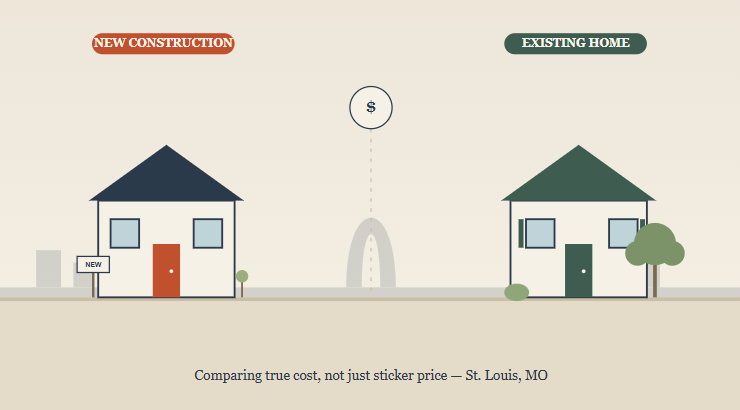
Most things cost more when they’re brand new. A new car costs more than a used one. New furniture costs more than a Facebook Marketplace find. Nobody expects the newest phone to be cheaper than last year’s model.
So it seems reasonable to assume a newly built home in St. Louis would cost more than one someone has already lived in.
Right now, that isn’t always true.
According to a recent National Association of REALTORS® article, the median price of a newly built single-family home was actually slightly lower than the median price of an existing home during the first quarter of 2026. The national gap was only about $1,400, and pricing varies block by block here in the St. Louis metro, so this won’t hold true everywhere. But it raises a real question local buyers are asking: how can builders sell brand-new homes for less when building has gotten so expensive?
Builders Spend Big Before They Ever List a Home
Long before a shovel hits the ground, a builder has already spent money purchasing and preparing land, securing approvals and permits, completing engineering and environmental reviews, meeting local building codes, and carrying financing costs the whole way through.
A National Association of Home Builders study cited in the NAR article found that government regulations at the federal, state, and local level add an average of $131,734 to the price of a new single-family home, roughly 26% of the average new-home sales price. That’s before a single stud goes up.
Builders are absorbing significant costs before there’s a house to sell, and they still need to earn enough to keep building, which matters for a metro like ours that needs more inventory.
How Builders in a Market Like St. Louis Keep Prices Competitive
Builders can’t control every cost, but they can control what they build. To reach affordability-minded buyers, many are building smaller homes on smaller lots, simplifying floor plans, and trimming the number of choices offered. Some lean on more economical fixtures and finishes rather than making higher-end options standard.
That doesn’t mean the homes are lower quality. Many meet newer standards for energy efficiency, technology, safety, and weather resistance that older housing stock doesn’t. It does mean buyers may be getting more of a blank slate. A similarly priced resale home may already have mature landscaping, custom window treatments, upgraded flooring, built-ins, or a finished basement. A new build may skip those extras to keep the base price within reach.
Builders can also offer incentives an individual seller usually can’t, like mortgage-rate buydowns and closing-cost assistance. According to the NAR article, 62% of builders were using sales incentives in June, and more than a third had reduced prices outright. For buyers focused on their monthly payment or the cash needed at closing, that can make a new build especially appealing.
Compare More Than the Sticker Price
The advertised price of a new build may look surprisingly affordable, but it often doesn’t include everything shown in the model home. Upgraded cabinets, flooring, appliances, structural options, and premium lots can push the final price well past the base price. Buyers may also need to budget for things a resale home already comes with, like blinds, fencing, landscaping, or a patio.
On the other side, an older home may need a new roof, HVAC system, windows, or appliances before long. A new build can mean lower utility bills and fewer major repairs in the first several years.
Figuring out which one is the better value takes more than comparing two listing prices, and it takes running the actual numbers on financing, not just the sale price.
Get Your Own Advocate on Both Sides of the Table
Builders play an important role in easing the housing shortage, and plenty are finding creative ways to price homes within reach. But they’re also running a business. Their sales reps, preferred lenders, and design-center staff are there to help the builder sell homes and stay profitable. Nothing wrong with that, but buyers deserve someone in their corner too.
That’s true for your real estate agent, and it’s true for your lender. As a local, Missouri-only lender, we walk St. Louis buyers through new-construction and resale financing side by side, so you can see the real monthly payment difference, not just the sticker price. We don’t charge broker fees, we often have lender credit available to cover closing costs, and on the right resale property with 20% equity we can frequently get an appraisal waiver, which speeds up closing and saves you money.
A brand-new home may genuinely cost less than an existing one in your part of St. Louis. Just make sure you compare everything that comes with each option, and everything that doesn’t, before deciding which is the better deal for you.
Thinking about new construction vs. resale in the St. Louis area? Let’s run the numbers together before you decide.
Your Local St. Louis Mortgage Team
Since 2004, Carlson Mortgage loan officers have helped thousands of St. Louis home buyers find the right loan, including conventional, FHA, VA, and jumbo financing up to $3.5 million. We’re rated the #1 mortgage company on Yelp and top-rated on Zillow, Facebook, and Google.
Call or text: 314-329-7314
Apply securely: www.carlsonstl.com/apply
Email: info@carlsonstl.com
Share Your Thoughts!